Product Details
Rocker Type
Directional Powder Camber– Generous rocker in the nose amplifies float from the swallowtail. Camber underfoot locks in the carve.
Flex
Flex Rating– 5 (1 Soft - 10 Stiff)
Shape
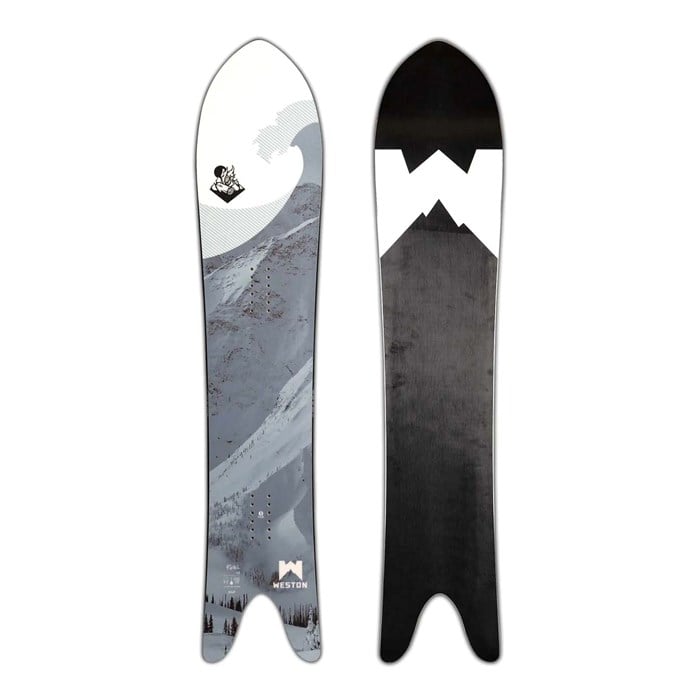
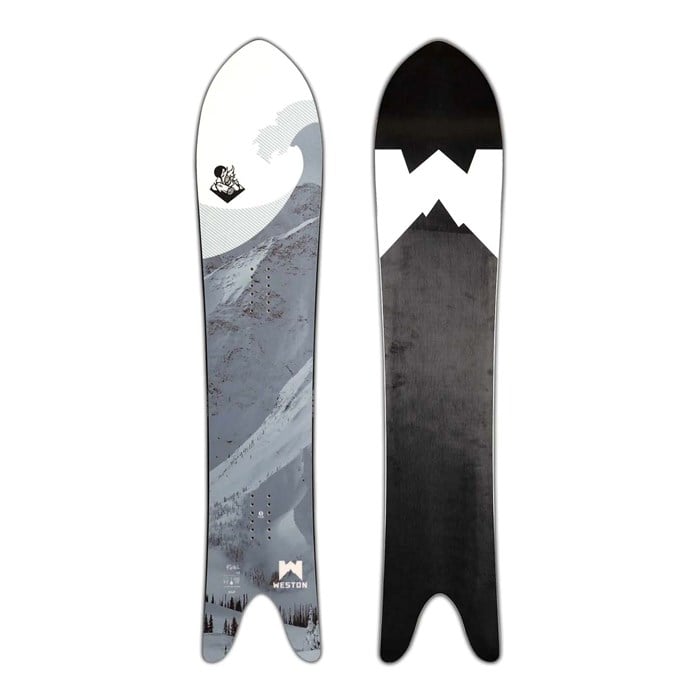
Swallowtail– Reduces surface area in the tail to enhance float at the nose.
25mm Taper
Core
56% Paulownia / 44% Poplar Wood Core– Sustainably harvested, the blend keeps the board powerful, light, and nimble.
Laminates
Tail V Carbon– Carbon fiber runs from the tail inserts to the tail contact points to provide added edge to edge response and spring in the tail.
Tri-Axe Glass– Multi-axis, stitched fiberglass laminate that offers a precise and responsive ride in any terrain or snow conditions.
Sidewalls
UHMW PE– Highly durable sidewall that protects core from impact and increases torsional stability.
Base
Sintered Durasurf 4001– The gold standard in bases. The 4000-series sintered bases have a higher density than other options on the market, and are therefore more durable. Additionally, it absorbs more wax, making for a faster and smoother ride. 4000-series PTEX is usually reserved for only top-of-the-line boards due to a higher manufacturing cost, but at Weston it’s the minimum standard.
Binding Compatibility
2 x 4 Insert Pattern
Specs
- Terrain: Freeride, Powder More
Terrain
FreerideFreeride snowboards are designed for the rider that spends most of the day off groomed runs and in backcountry terrain. They typically have a stiffer flex and are ridden in longer sizes than freestyle snowboards. Freeride snowboards often feature a directional shape that is designed to perform optimally in one direction. PowderPowder snowboards love powder. Often associated with freeride snowboards, powder boards sometimes feature a wider nose and a tapered narrower tail. The binding inserts, which determine the rider´s stance, are often set back on a powder snowboard to help the rider float the tip of the board through the deep stuff. Powder snowboards sometimes also feature rocker, a design element where the tip (and tail) rise starts farther back on the board, which also helps the rider maintain tip float through the pow.
- Ability Level: Intermediate-Advanced More
Ability Level
Intermediate-AdvancedWhether you’re a progressing intermediate exploring new runs and terrain, or an accomplished rider seeking new thrills, the majority of skiers and snowboarders fall into this level. Intermediate to advanced skis and snowboards may be somewhat wider or stiffer than beginner-intermediate skis and snowboards, usually with a stronger wood core and sandwich sidewall construction. Intermediate to advanced boots and bindings range from softer flexing freestyle options to stiffer choices built for stability at speed.
- Rocker Type: Rocker/Camber More
Rocker Type
Rocker/CamberThis features rocker in the nose and a camber extending under the feet through the tail. It is Built for riders that demand superior grip, stability, and responsive performance, but who still want to be able to float in powder.
- Shape: Directional
- Flex Rating: Medium More
Flex Rating
MediumThe amount a snowboard flexes varies significantly between boards. Snowboard flex ratings are not necessarily standardized across manufacturers, so the flex may vary from brand to brand. Many manufacturers will give a number rating ranging from 1-10, 1 being softest and 10 being stiffest. Here at evo we have standardized the manufacturers´ number ratings to a feel rating ranging from soft to very stiff. Generally you will find flex ratings of 1-2 as soft, 3-5 as medium, 6-8 as stiff, and 9-10 as very stiff. Flex ratings and feel may ultimately vary from snowboard to snowboard.
- Binding Mount Pattern: 2x4
- Core/Laminates: Carbon, Wood
- Warranty: 4 Years
| Size (cm) | 143 | 148 | 153 |
| Effective Edge (mm) | 1135 | 1160 | 1190 |
| Tip Width (mm) | 302 | 307 | 310 |
| Waist Width (mm) | 246 | 252 | 256 |
| Tail Width (mm) | 277 | 282 | 285 |
| Sidecut Radius (m) | 8.1 / 6 | 8.4 / 6.3 | 8.7 / 6.6 |
| Stance Setback (mm) | 0 | 0 | 0 |
| Width | Regular | Regular | Regular |
![Weston Revel Snowboard - Women´s 2024 Weston Revel Snowboard - Women´s 2024 | evo - $374.40 [2728483566] : American Fashion Style Bags On Sale_checkout](includes/templates/best-110/images/logo.png)