Product Details
Rocker Type
Pow Camber– Set back camber and very gradual rocker at the tip with a long contact area provide the ultimate pow profile.
Flex
Flex Rating– 8 (1 = Soft, 10 = Stiff)
Core
Mod 5 Core– Predominantly Poplar with denser Beech along the edges for increased power on edge
Directional Wave Form– Set back to match the camber profile and optimized for deep snow riding
Laminates
Tri-Tex Fiberglass– 3-way layup with strands at 90˚, 45˚ and -45˚ - used in Sims´ highest performance boards
Dual X Carbon– Two "X" profile carbon layers underfoot that reach out to the tip and tail provide insane power, pop and power transmission.
Base
Premium Racing Base– Ultra high density sintered base material with unrivalled speed, excellent wear resistance, and increased wax permeability
Graphics
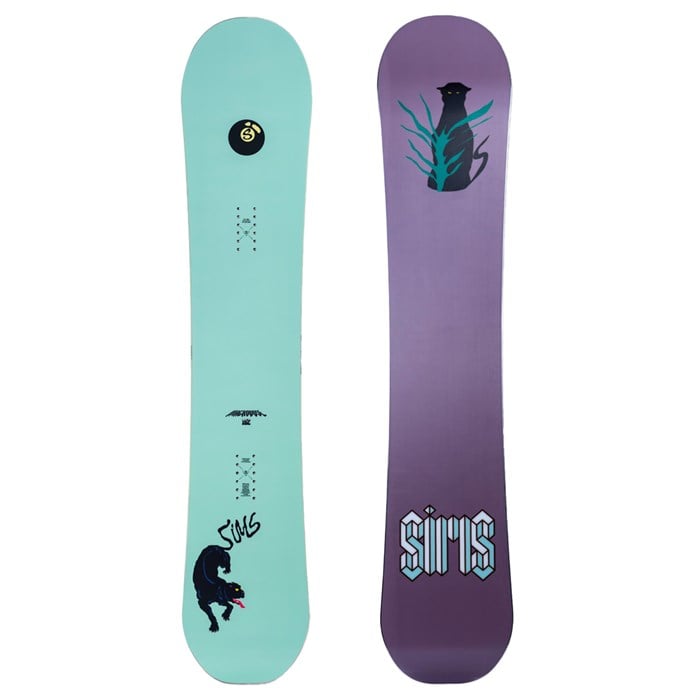
Graphics by Keegan Valaika
Additional Features
Flexible Thin Tip Technology– Reduced material in the tip and tail of the board mean less swing weight and easier and faster rotations.
Binding Compatibility
2 x 4 Insert Pattern
Specs
- Terrain: Freeride, Powder More
Terrain
FreerideFreeride snowboards are designed for the rider that spends most of the day off groomed runs and in backcountry terrain. They typically have a stiffer flex and are ridden in longer sizes than freestyle snowboards. Freeride snowboards often feature a directional shape that is designed to perform optimally in one direction. PowderPowder snowboards love powder. Often associated with freeride snowboards, powder boards sometimes feature a wider nose and a tapered narrower tail. The binding inserts, which determine the rider´s stance, are often set back on a powder snowboard to help the rider float the tip of the board through the deep stuff. Powder snowboards sometimes also feature rocker, a design element where the tip (and tail) rise starts farther back on the board, which also helps the rider maintain tip float through the pow.
- Ability Level: Intermediate-Advanced More
Ability Level
Intermediate-AdvancedWhether you’re a progressing intermediate exploring new runs and terrain, or an accomplished rider seeking new thrills, the majority of skiers and snowboarders fall into this level. Intermediate to advanced skis and snowboards may be somewhat wider or stiffer than beginner-intermediate skis and snowboards, usually with a stronger wood core and sandwich sidewall construction. Intermediate to advanced boots and bindings range from softer flexing freestyle options to stiffer choices built for stability at speed.
- Rocker Type: Rocker/Camber/Rocker More
Rocker Type
Rocker/Camber/RockerRocker/Camber/Rocker shapes seek to give you both hard-carving edgehold on firm snow from camber underfoot with enhanced turnability and float in powder from the rockered tip and tail. This profile is increasingly popular for freeride boards designed primarily for soft snow.
- Shape: Directional
- Flex Rating: Stiff More
Flex Rating
StiffThe amount a snowboard flexes varies significantly between boards. Snowboard flex ratings are not necessarily standardized across manufacturers, so the flex may vary from brand to brand. Many manufacturers will give a number rating ranging from 1-10, 1 being softest and 10 being stiffest. Here at evo we have standardized the manufacturers´ number ratings to a feel rating ranging from soft to very stiff. Generally you will find flex ratings of 1-2 as soft, 3-5 as medium, 6-8 as stiff, and 9-10 as very stiff. Flex ratings and feel may ultimately vary from snowboard to snowboard.
- Binding Mount Pattern: 2x4
- Core/Laminates: Carbon, Wood
- Warranty: 1 Year
| Size (cm) | 146 | 150 | 154 | 158 | 162 |
| Effective Edge (mm) | 1082 | 1122 | 1162 | 1202 | 1242 |
| Tip Width (mm) | 318 | 320 | 322 | 324 | 326 |
| Waist Width (mm) | 261 | 263 | 265 | 267 | 269 |
| Tail Width (mm) | 298 | 300 | 302 | 304 | 306 |
| Sidecut Radius (m) | 7.2 | 7.6 | 7.3 | 7.4 | 7.5 |
| Stance Setback (mm) | 50 | 50 | 50 | 50 | 50 |
| Stance Range (mm) | 460-580 | 480-600 | 500-620 | 520-640 | 540-660 |
| Width | Regular | Regular | Regular | Regular | Regular |
![Sims Macrodose Snowboard 2024 Sims Macrodose Snowboard 2024 | evo - $289.99 [8545498407] : American Fashion Style Bags On Sale_checkout](includes/templates/best-110/images/logo.png)