Product Details
Rocker Type
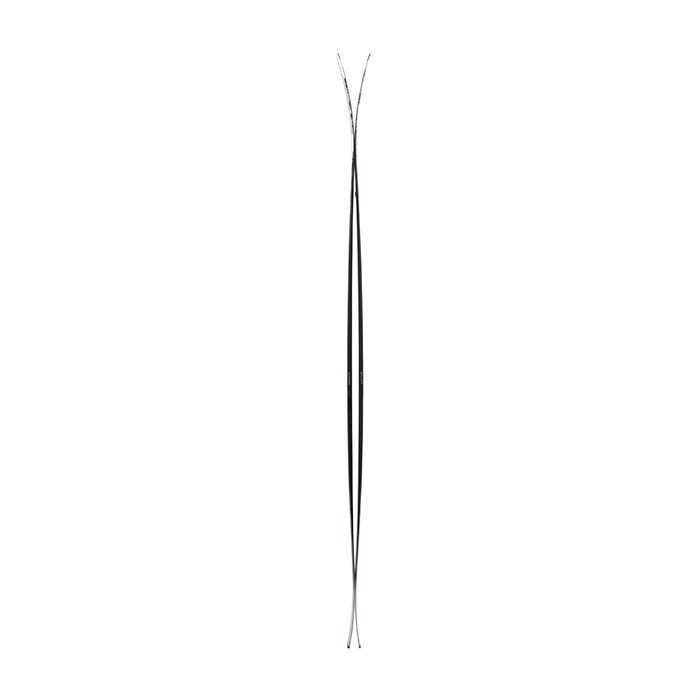
EST Freeride Rocker– Fore body rocker and extra tip-taper combine to create EST for optimized float in the soft stuff. Positive camber under foot with no tail rocker ensures these skis stay on rails when carving is the priority
Flex
Flex (1=Soft, 10=Stiff)– Tip =7, Waist = 8, Tail = 8
Core
Poplar Core– Stability, power and ease are paramount in this 100% Poplar wood core. For those looking for predictability and smoothness the Poplar Core delivers in all snow conditions.
Laminates
ATB-X– A more condensed version of Armada´s ATB (Articulated Titanal Banding), ATB-X has been modified for a focused, damp feeling underfoot, but by reducing the amount of metal & weight in the extremities of the ski it becomes much more poppy, loose, and freeride feeling.
Titanal– A Titanal layer adds horsepower to the ski with uncompromising performance.
Elastic Compound Layer– This layer allows the ski to enter a turn with ease while compressing and releasing even more energy out of the turn than a traditional Ti layer.
Sidewalls
AR100 Sidewall
Base
Comp Series Base– Sintered UHMW polyethylene with added carbon aids in speed and durability on snow.
Edges
2.1 All Mountain Edge– Heat treated and built to avoid excess weight while maintaining durability, this edge gives the best balance of durability and feel of Armada´s whole collection
Binding Compatibility
We recommend a brake width equal to or at most 15 mm wider than the ski waist width.
Specs
- Terrain: All-Mountain, Big Mountain More
Terrain
All-MountainAll-mountain skis are designed to handle anything you throw at them including powder, ice, groomers, steeps, heavy snow, and everything in between, but they aren’t necessarily a master of any one terrain. If you’re only going to own one ski to do it all, this is what you want. All-mountain skis generally have what we call mid-fat waists that range from 80-110 mm. Big MountainBig mountain skis are designed for charging big lines with high speeds and big airs. These skis varry in width from wide, powder-oriented skis for skiing Alaska spines to narrower, mixed condition skis for ripping the beat up headwall at your local mountain. Skis in this category tend to be on the stiffer side, often with more rocker in the tip and less in the tail.
- Skis: No Bindings
- Ability Level: Intermediate-Advanced More
Ability Level
Intermediate-AdvancedWhether you’re a progressing intermediate exploring new runs and terrain, or an accomplished rider seeking new thrills, the majority of skiers and snowboarders fall into this level. Intermediate to advanced skis and snowboards may be somewhat wider or stiffer than beginner-intermediate skis and snowboards, usually with a stronger wood core and sandwich sidewall construction. Intermediate to advanced boots and bindings range from softer flexing freestyle options to stiffer choices built for stability at speed.
- Rocker Type: Rocker/Camber/Rocker More
Rocker Type
Rocker/Camber/RockerRocker/Camber/Rocker skis have the playfulness and float of a rockered ski as well as the added edge hold of a cambered ski. The contact points on skis with this profile are closer towards the middle of the ski than a fully cambered ski, but still not underfoot. The cambered midsection provides a longer effective edge on hardpack, increasing edge hold and stability, while the rockered tip and tail provide floatation in deeper snow and allow the ski to initiate and release from turns easier.
- Turning Radius: Medium More
Turning Radius
Medium17-22 m radius is best for all-mountain and park & pipe.
- Core/Laminates: Wood
- Tail Type: Partial Twin Tip More
Tail Type
Partial Twin TipPartial twin tip skis have a tail that is turned up, but not as much as the tip. This gives you the ability to ski backwards and back out of tight spaces, but these skis are mainly designed to ski forward.
- Warranty: 2 Years
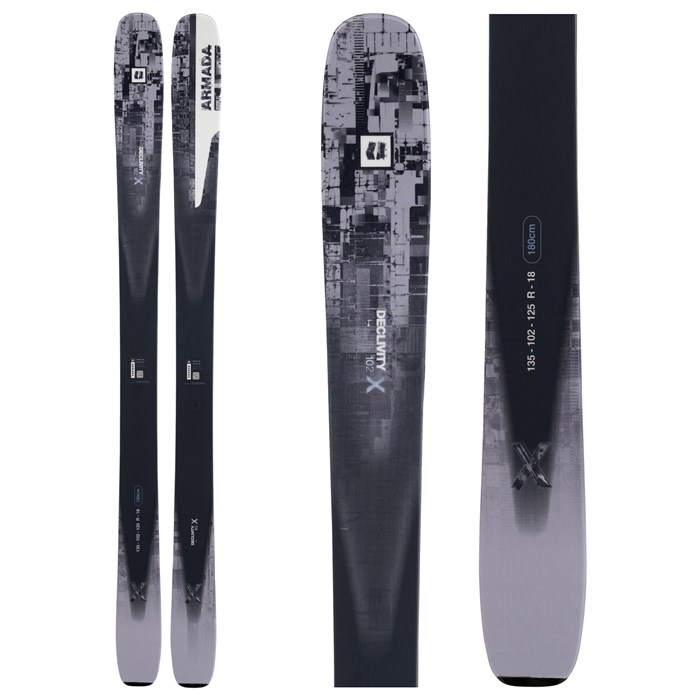
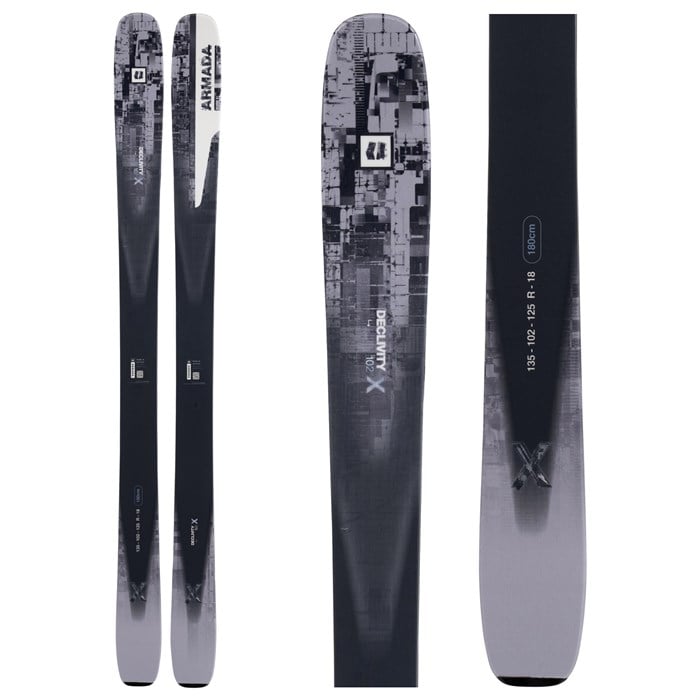
| Size (cm) | 172 | 180 | 188 |
| Tip Width (mm) | 134 | 135 | 136 |
| Waist Width (mm) | 102 | 102 | 102 |
| Tail Width (mm) | 124 | 125 | 126 |
| Turning Radius (m) | 17.5 | 18 | 18.5 |
| Indiv. Ski Weight (g) | 1850 | 1950 | 2050 |
![Armada Declivity X 102 Skis 2026 Armada Declivity X 102 Skis 2026 | evo - $799.95 [3986804496] : American Fashion Style Bags On Sale_checkout](includes/templates/best-110/images/logo.png)